Anyway, we'll start with a little history lesson. What the heck is human factors? Like I said in my introductory post, it is - in part - applied psychology. It's often characterized this way because of the field's historical roots. And as with all great advances in science, it was born out of World War II.
As an aside, the field also has roots coming from "efficiency experts" of sorts such as Frank and Lillian Gilbreth of Cheaper by the Dozen fame (the original, not the godawful Steve Martin remake). For now, I'm going to focus on the scientific aspect.
As you are no doubt aware, World War II was a golden age for the development of new ways for humans to kill each other. The field of aviation was one such booming area. Do a google image search for "World War II aircraft," and then do a search for "Pokémon." You will find the results to be eerily similar to one another.


As an aside, the field also has roots coming from "efficiency experts" of sorts such as Frank and Lillian Gilbreth of Cheaper by the Dozen fame (the original, not the godawful Steve Martin remake). For now, I'm going to focus on the scientific aspect.
As you are no doubt aware, World War II was a golden age for the development of new ways for humans to kill each other. The field of aviation was one such booming area. Do a google image search for "World War II aircraft," and then do a search for "Pokémon." You will find the results to be eerily similar to one another.
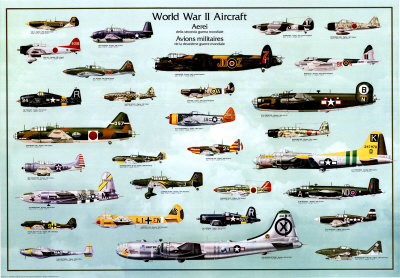
Man, Nintendo's really getting lazy with these Pokémon designs.
Point is, the world was engineering the hell out of aircrafts. We were making them bigger, tougher, faster, more agile, painted to look like sharks. Engineering was hitting a plateau. (Especially with that shark thing - have you ever seen a plane painted to look like something more bad-ass than that?) Aircraft represented the pinnacle of contemporary human technology. And so, of course, you can understand why the military would go to great lengths to make sure the operators of their ludicrously expensive, cutting-edge tech were extensively trained to skillfully exploit it.
But here's the problem: the military kept seeing plane crashes that had nothing to do with combat. Extensive, thorough training with these machines, all the single-minded discipline of the top pilots of the air force, and the cleverest mechanical engineering just weren't enough to keep these things intact and pilots safe to the military's standards. What was happening? With the razor-sharp clarity of hindsight, you probably know where this is going. Let's take a look at a World War II era cockpit. I never claimed to be a WWII aircraft buff, so I'm not going to pretend I know anything about this plane, but just look at this mess:
Cockpit from a B-24 Liberator, which sounds like the name of a sex toy to me.
Humans (and their brains) evolved to do some pretty awesome things. The fact that I'm transmitting thoughts from my mind to yours through the use of visual symbols is itself staggering. But humans, in terms of sheer hardware, evolved to basically hang out with a few other humans, pick berries, catch the occasional small animal for dinner, and run like hell from the occasional big animal looking for dinner.
Evolution has not sufficiently operated on our bodies and minds to optimize them for driving down a road in a 2-ton death machine at 70 mph, let alone soaring above the clouds while relying on something like what you see above to keep us up there. But I'm jumping ahead in our story.
The military brought in scientists from different fields to try answering the question: why do our planes keep crashing? Setting a precedent for future generations of human factors specialists to follow, the psychologists in the room stated the obvious: the cockpits are too damn confusing. There was simply too much information being shoved down the bottleneck of human attention, and the pilots just couldn't manage it all while having to simultaneously operate the things. The major culprit wasn't something about the mechanics of the aircraft - it was human error.
And so, the psychologists, being the amazing wizards of understanding and systematically studying human behavior that they are (HA! Just kidding - the field didn't really get its shit together, in my opinion, until behaviorist and cognitive psychologists started duking it out in the 60s and everyone had to become that much more precise and rigorous in order to establish scientific dominance. but these guys were still pretty good. Oh, man, this ended up being a really long parenthesis. Where was I? Oh, yeah, the psychologists, as experts in studying human behavior), isolated the sources of human error and worked with engineers to prescribe remedies to the problems.
Then life for the first human factors engineers became a victory montage set to 40s big band music. Cockpit designs evolve, there are shots of guys wiping sweat off their brows and gazing thoughtfully at blueprints, pilots start crashing less, the war ends, and then a sailor in New York creates an iconic photograph by committing what amounts to sexual assault on a random nurse in the street.
But what of our scientists?
The military had no use for them anymore and sent them home like all those drafted military men. But they were bitten by the human factors bug. Their heads were still full of research questions the military didn't care about or otherwise deemed "out of scope" for their purposes. And everyone knows how dangerous it is to leave a scientist alone with a burning question that dwells within him.
And so, like David Banner in the credits of the 80's Incredible Hulk TV show, the scientists were sent hitchhiking down a desert road to some oddly maudlin piano music...
To be concluded in the next post.
The military brought in scientists from different fields to try answering the question: why do our planes keep crashing? Setting a precedent for future generations of human factors specialists to follow, the psychologists in the room stated the obvious: the cockpits are too damn confusing. There was simply too much information being shoved down the bottleneck of human attention, and the pilots just couldn't manage it all while having to simultaneously operate the things. The major culprit wasn't something about the mechanics of the aircraft - it was human error.
And so, the psychologists, being the amazing wizards of understanding and systematically studying human behavior that they are (HA! Just kidding - the field didn't really get its shit together, in my opinion, until behaviorist and cognitive psychologists started duking it out in the 60s and everyone had to become that much more precise and rigorous in order to establish scientific dominance. but these guys were still pretty good. Oh, man, this ended up being a really long parenthesis. Where was I? Oh, yeah, the psychologists, as experts in studying human behavior), isolated the sources of human error and worked with engineers to prescribe remedies to the problems.
Then life for the first human factors engineers became a victory montage set to 40s big band music. Cockpit designs evolve, there are shots of guys wiping sweat off their brows and gazing thoughtfully at blueprints, pilots start crashing less, the war ends, and then a sailor in New York creates an iconic photograph by committing what amounts to sexual assault on a random nurse in the street.
But what of our scientists?
The military had no use for them anymore and sent them home like all those drafted military men. But they were bitten by the human factors bug. Their heads were still full of research questions the military didn't care about or otherwise deemed "out of scope" for their purposes. And everyone knows how dangerous it is to leave a scientist alone with a burning question that dwells within him.
And so, like David Banner in the credits of the 80's Incredible Hulk TV show, the scientists were sent hitchhiking down a desert road to some oddly maudlin piano music...
To be concluded in the next post.
